Spatial continuity
A scene feels more convincing when nearby surfaces, objects, and lighting remain understandable as the viewpoint changes.
Use a luma ai image as the visual starting point.Interactive scene guide
Luma AI interactive scenes connect generated video, spatial context, and guided exploration into a more engaging visual format. This page explains the capability without treating it like a conventional video export.
Try the creative workflow01 / Workflow
Turn a visual idea into a navigable moment: define the scene, generate a spatially coherent result, then give viewers a reason to look around rather than simply watch from one fixed angle.
Start with the subject, setting, lighting, camera intent, and the kind of movement a viewer should notice.
Refine composition and motion until the generated world supports the story instead of distracting from it.
Present the result as an experience with visual depth, clear orientation, and a deliberate path through the scene.

02 / Mechanisms
The useful distinction is not simply “video versus image.” Interactive scenes work by combining visual generation with spatial cues and a viewer-controlled point of attention.
A scene feels more convincing when nearby surfaces, objects, and lighting remain understandable as the viewpoint changes.
Use a luma ai image as the visual starting point.Movement gives the viewer a reason to continue exploring, whether the emphasis is a reveal, a transition, or a change in scale.
Compare the motion-first approach with luma ray 3.Interactive presentation can make a product, place, or concept easier to understand because the viewer controls where to look next.
Pair scene planning with luma ai image references.The strongest scenes still have an editorial purpose: every angle, object, and transition should support a clear takeaway.
Build cinematic movement around luma ray 3 concepts.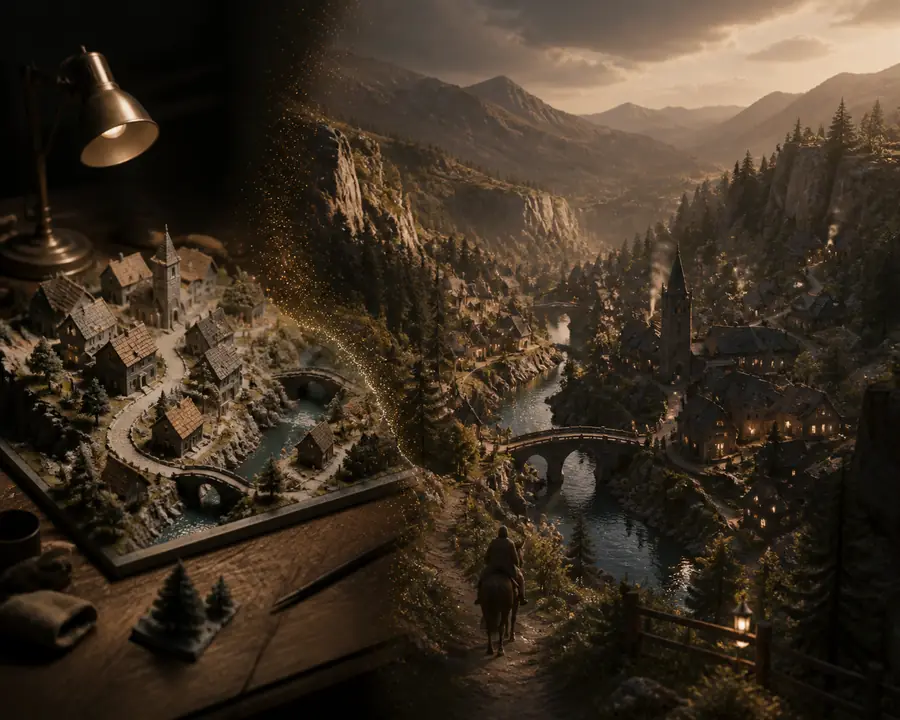
03 / Planning
A practical luma labs workflow keeps the first version narrow. Choose one environment, one visual action, and one viewer question before adding complexity.
First, write a compact scene brief rather than a paragraph of disconnected adjectives. Next, produce a small set of variations and compare them for continuity, camera logic, and visual focus. Then select one direction and refine only the elements that affect the viewer’s path. Finally, publish or export the scene with a short explanation so the audience understands what to explore.
For a faster handoff, keep the prompt, reference image, chosen variation, and revision note together. This makes the workflow easier to repeat across a campaign, a learning module, or a product presentation.
04 / Boundaries
Interactive presentation is useful, but it does not remove the underlying challenges of generative media. Treat these constraints as part of the production plan.
Fine structure, text, reflections, and repeated objects may shift when the viewpoint or motion changes.
Workaround: simplify the set and use reference images for critical details.
A generated scene should not be assumed to provide editable meshes, production-ready rigs, or precise object controls.
Workaround: move to a dedicated 3D pipeline when exact asset control matters.
More freedom is not always better; viewers can miss the intended story if every direction appears equally important.
Workaround: use visual anchors and a short guided sequence.
Vague prompts make it harder to preserve subject identity, lighting, scale, and a coherent camera idea.
Workaround: specify the environment, lens feel, movement, and focal subject separately.
05 / Continue exploring
06 / Comparison
| Attribute | Interactive scene | Fixed video |
|---|---|---|
| Viewer viewpoint | Explorable | Fixed |
| Spatial context | Central to the experience | Suggested by framing |
| Best for | Discovery and orientation | Linear storytelling |
| Revision focus | Scene continuity and anchors | Timing and edit points |
| Production control | Less exact | More predictable |
| Audience behavior | Active exploration | Passive viewing |
07 / Questions
They are generated visual environments designed to give an audience more spatial context and more control over where attention moves than a standard flat clip.
No. They can support exploration, but they are not automatically games, simulations, or fully editable 3D worlds with rules and player systems.
Describe the setting, subject, lighting, camera behavior, desired motion, and visual priority. A focused brief usually performs better than a long list of unrelated styles.
Choose a fixed video when timing, narration, exact composition, or a tightly controlled sequence matters more than viewer-led exploration.